
|
Gallery of Photos from the National Capital Cactus and Succulent SocietyThe following collection of
photos have been collected from our members and reflect
their activities regarding cacti and succulent
plants. Some have been part of our club newsletter
stories and others are direct from member's personal
collections. The photos can be viewed in a larger
format by clicking on the photo with your mouse.
After viewing the larger image you can return to this page
by using the back button of your browser. We hope
you enjoy the pictures and comments are always
welcomed.
|
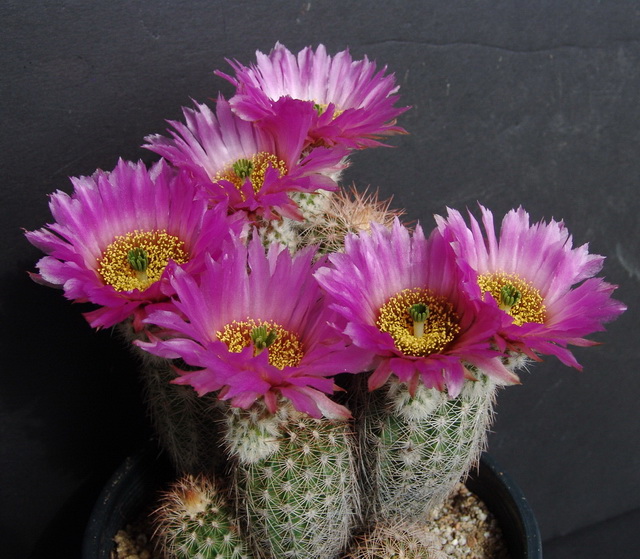 |
Echinocereus baileyi
Echinocereus baileyi now classified as
a variety of Echinocereus
reichenbachii, but it remains as one of the most
winter hardy of all the echinocereus. It grows naturally
in northern Texas and into western Oklahoma and can easily
withstand temperatures below freezing. The plant
shown was grown from seed and is planted in a one gallon
nursery pot, ready for planting in an outdoor, winter
hardy planting in Maryland. Given enough sun and a
well drained soil E.
bailey is easy to grow and readily forms
attractive clumps. As seen in the photo, the flowers
are wonderfully large, colorful, and produced in
abundance. If you live in an area where winter
temperature rarely go below 20 degrees this would be a
plant you should try. |
|
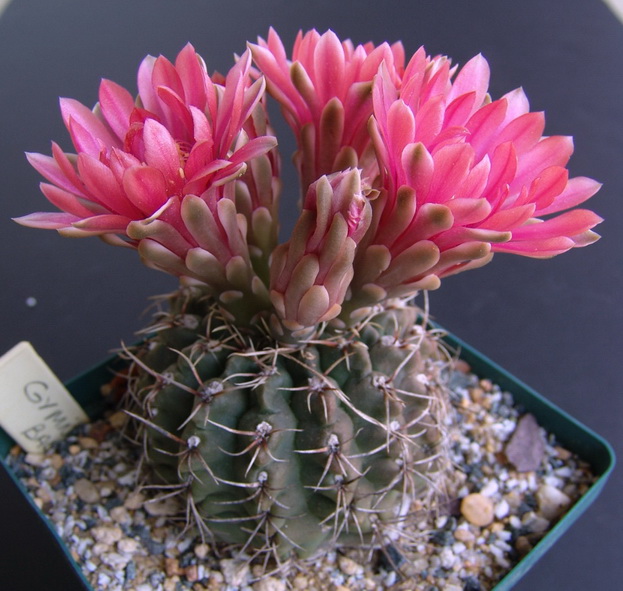 |
Gymnocalycium baldianum
|
|
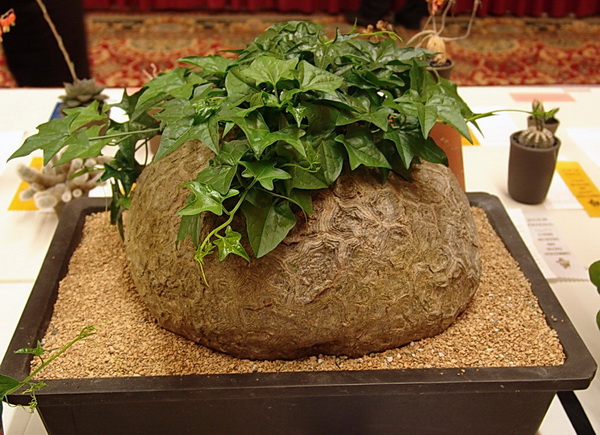 |
Gerrardanthus macrorhizusThis is a plant from the Plant Show of the recent
17th Eastern Cactus and Succulent Conference in
Waterbury, Connecticut. This type of plant
is known as a caudiciform, which is a plant that
develops a swollen root or lower stem (called a caudex)
that stores water. Some caudiciforms produce their
caudex below ground, other produce theirs above
ground. Most growers prefer to have the caudex
above ground where it can be seen. Gerrardanthus macrorhizus
is in the Cucurbitaceae
family and is native to South Africa. The caudex
grows reasonably quickly if the plant is kept warm,
given partial shade, and plenty of water.
|
|
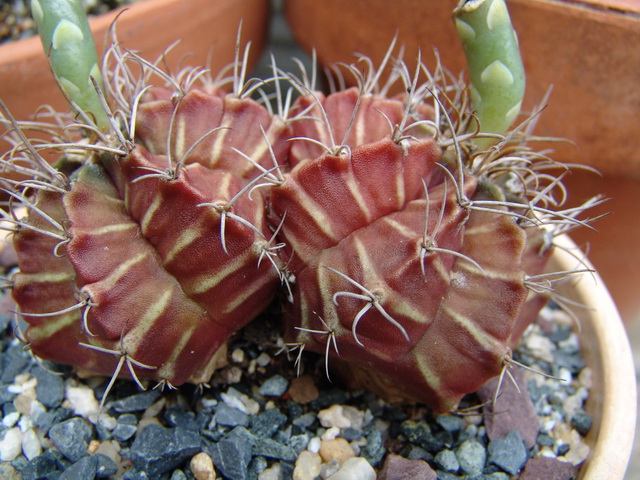 |
Gymnocalycium mihanovichii
|
|
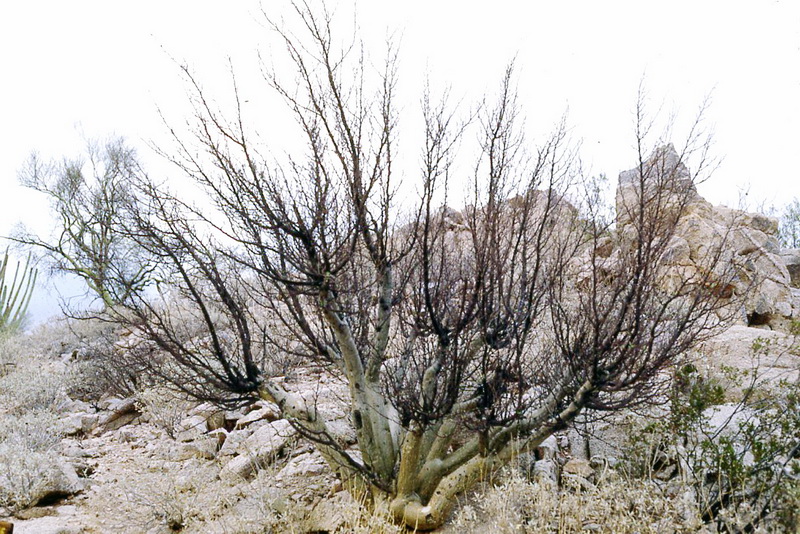 . . |
Bursera microphylla
|
|
 |
Lithops bromfieldii
|
|
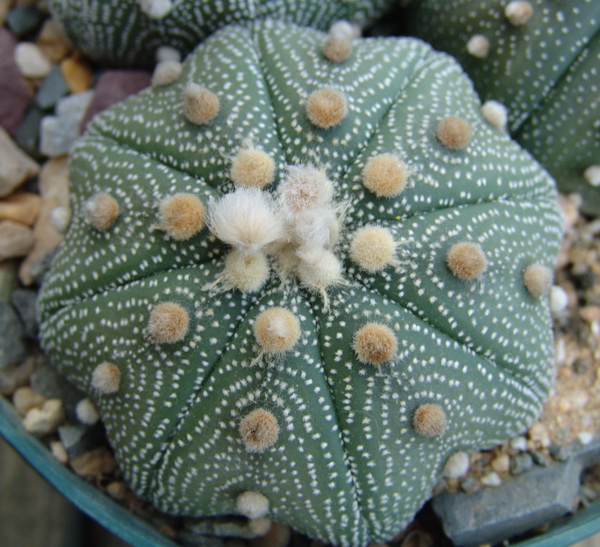 |
Astrophytum asterias "Star
Form"
|
|
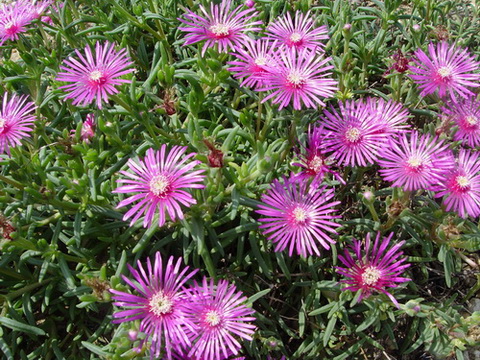 |
Delosperma cooperi
|
|
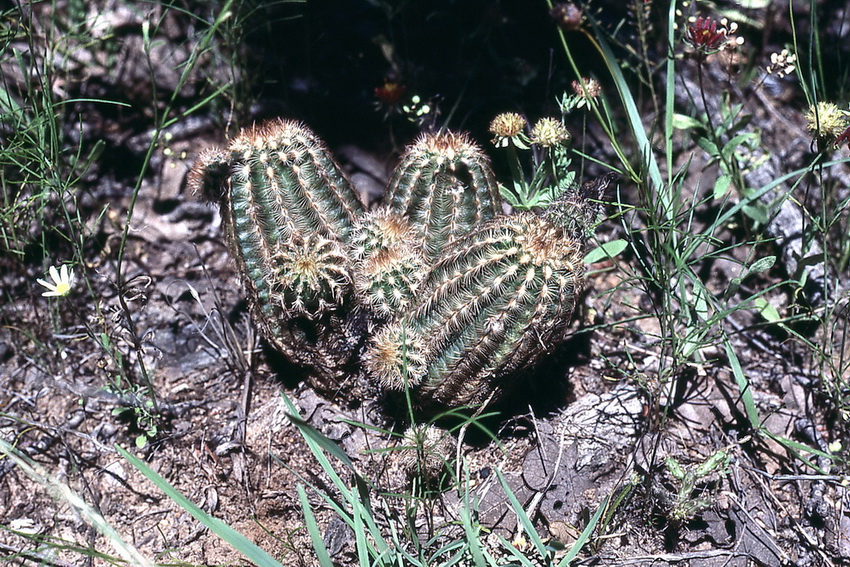 |
Echinocereus reichenbachiiThis photo was taken at a picnic area along Interstate 20 between Ft. Worth and Abilene Texas. Echinocereus reichenbachii is one of the most attractive cacti native to the United States. While it has very attractive flowers the spines and clustering habit of the plant are also great. Member Bob Stewart took this photo during a trip to the Southwest in the late 1980's. grown outside during the frost free parts of the year and then brought inside to a sunny window from mid fall through mid spring. |
|
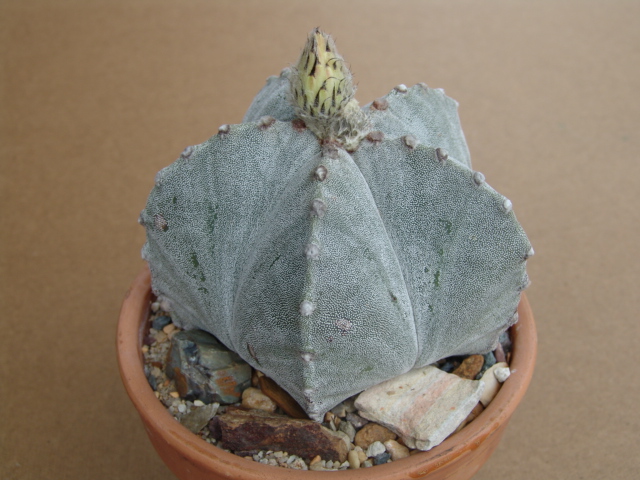 |
Astrophytum myriostigmaThis picture is from a plant in club member Bob Stewart's collection and demonstrates the rock-like appearance of this species. Bob grows most of his plants from seed and this plant is 12 years old from seed. Astrophytum myriostigma (the bishop's cap cactus) is native to Mexico where it grows on hillsides of limestone rock where it blends in wonderfully with its surrounding. Often when a succulent grows in a cyptic manner (blending in with the background) it has small or no spines. Bob's plant is showing a flower bud that will open to a large 2 to 3 inch diameter yellow flower. |
|
 |
Epithelantha micromerisThis is the "button cactus" flowering in the
collection of one of our members in December. The plant
is small, only an inch and a half in diameter and the
flowers are even smaller. E. micromeris is
relatively common throughout a good part of West Texas
and Southern New Mexico, although due to its small size
it is often difficult to find. It is also easy to
grow providing it receives a lot of sun and a gritty,
very well drained potting soil.
|
|
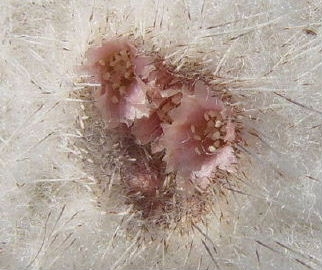 |
Epithelantha micromerisFlower Close upSometimes it's hard to appreciate the smaller
cactus flowers from eye level. A close up lens on
the camera can help show the flower of Epithelantha micromeris
is more detail and reveal its beauty. The flowers
shown here are less than one quarter inch across.
|
|
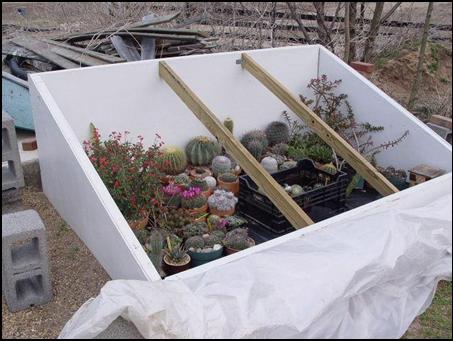 |
Heated Outdoor Frame for Overwintering SucculentsThis is a members cheap alternative to a
greenhouse. It's a cold frame to which a small,
electric heater as been added to overwinter plants in
Maryland. The frame measures 8 feet wide by 5
feet long and is covered by a sheet of 6 mil clear
plastic. A 1500 watt space heater, connected to
a thermostat provides heat. The thermostat is
set for a 40 degree minimum. The story of the
frame was in the October 2006 newsletter.
|
|
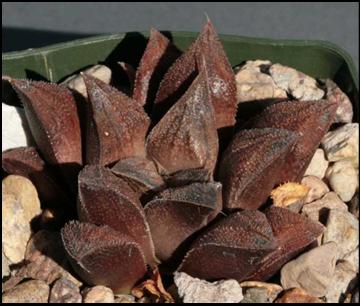 |
Haworthia 'Chocolate'This is a very colorful haworthia cultivar to
grow and was featured in our December 2006
newsletter. One of our members had
purchased this plant from the Nursery of Steven
Hammer and then lost the plant when his house was hit
by a tornado!
|
|
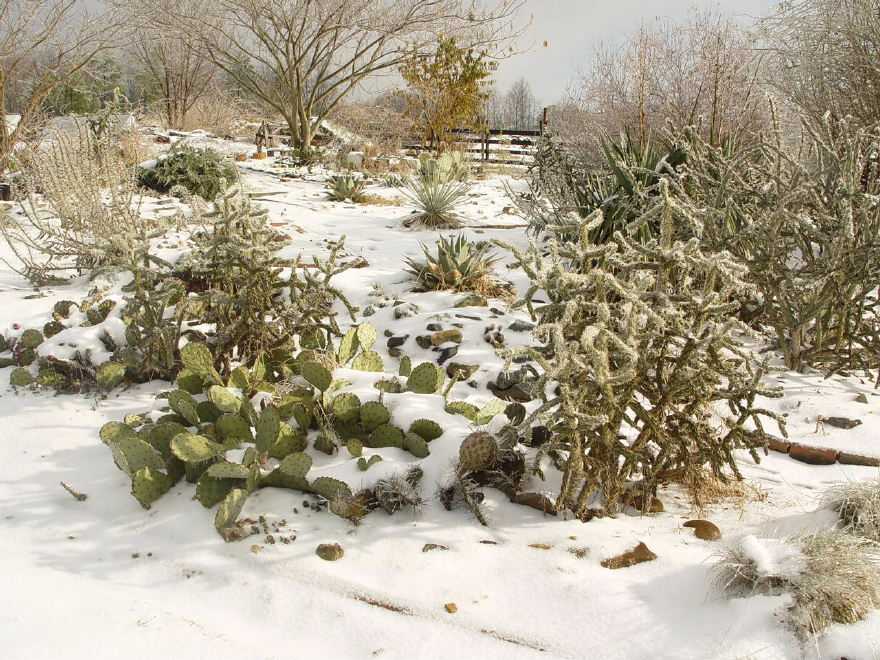 |
Cacti In The Snow - In Maryland!Yes Virginia, cacti can be grown where it
snows, including the Eastern parts of the
U.S. This photo was taken in one of our
member's yards in Maryland. The plant in the
right foreground is Cylindropuntia
imbricata. In the left foreground is Opuntia phaecantha.
Both of these cacti are cold and snow tolerant, at
least in the Mid Atlantic region. Click on
the photo to see a larger version.
|
|
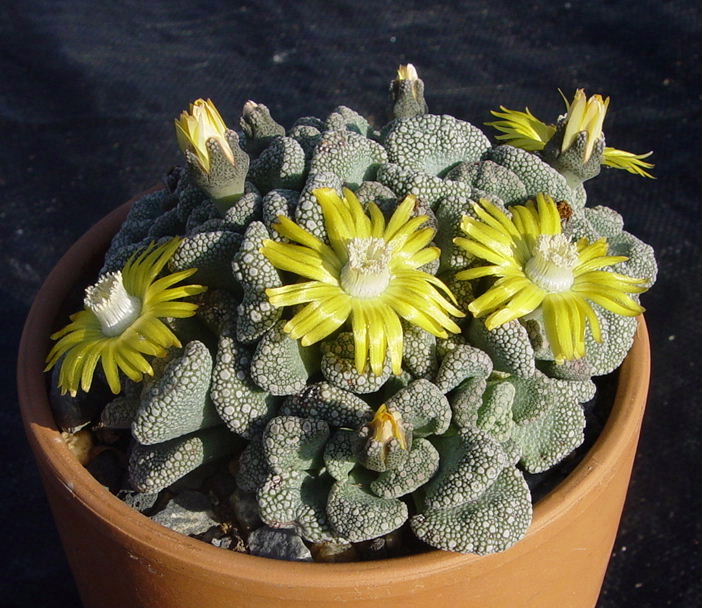 |
Titanopsis calcareaIt's interesting that for some growers the
mesembs, such as Titanopsis calcarea, are very
difficult to grow well, and yet for others they almost
seem to grow themselves. However, there is no
doubt when growing well, and flowering, they are among
the most beautiful and interesting of succulent
plants. The plant pictured here is grown
outdoors in full sun during the frost free part of the
year and spends the winter in the heated frame shown
at the top of this page.
|
|
 |
Agave havardianaThis photo was not taken in Arizona or Texas, but in Charles County in Southern Maryland. The Agave pictured here is part of a hardy cactus and succulent garden. There are actually quite a few cacti and other succulents that are winter hardy here in the eastern U.S. This agave was grown from seed, is 14 years old, and has been in the hardy cactu planting since 1996. |
|
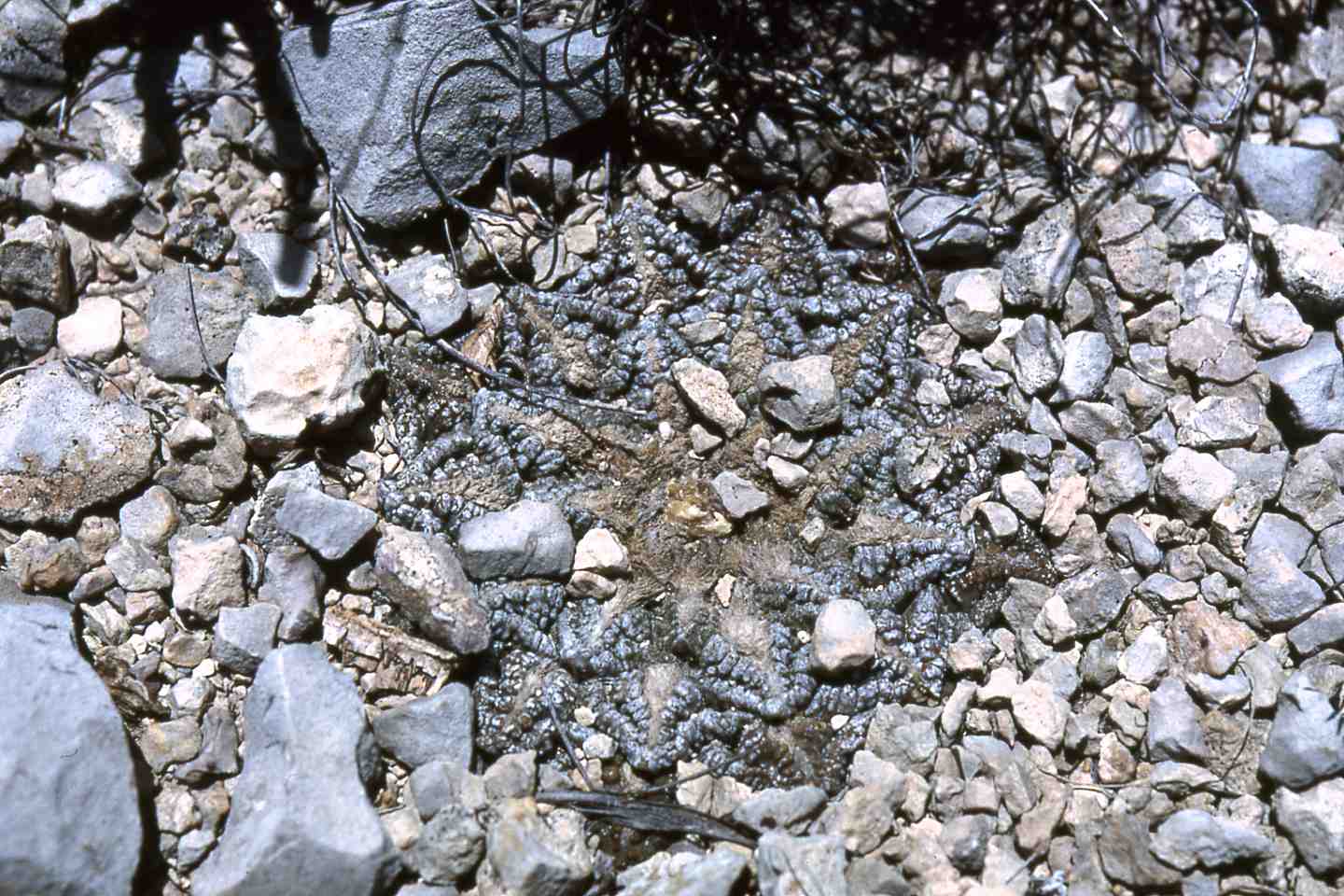 |
Ariocarpus fissuratusThis habitat photo was taken at Dagger Flats in
Big Bend National Park in Texas. Ariocarpus are
known as "Living Rock" cacti and when not in flower they
blend into the rock covered ground so well they are
often very difficult to find. Ariocarpus is
unusual for cacti in that it flowers in late summer and
early fall.
|
|
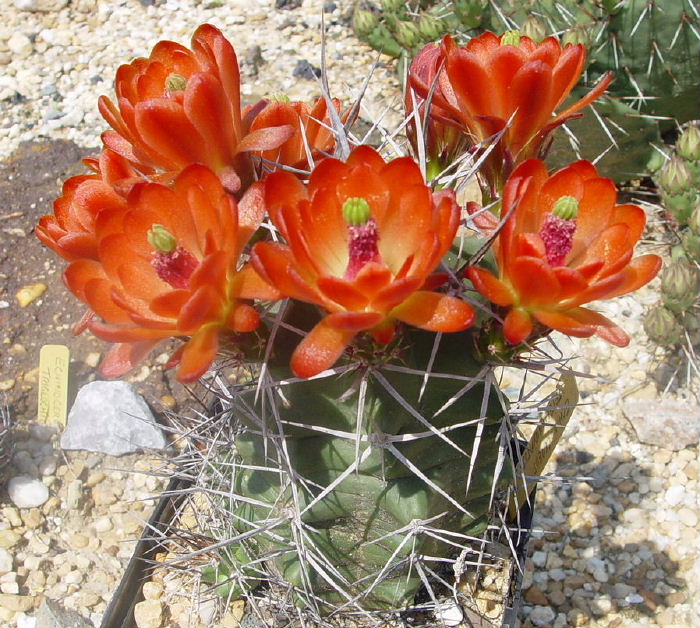 |
Echinocereus triglochidiatusThe common name of E. triglochidiatus is the claret-cup cactus; in reference to the deep red (scarlet) flower color. It's native throughout a large portion of the U.S. Southwest and Mexico. This plant is growing in one of our member's yards. While it is in a pot, it remains outside all year. Many of the echinocerei are winter hardy in the mid Atlantic area provided they have excellent soil drainage. This plant was grown from seed obtained from Mesa Garden, a nursery specializing in cacti and other succulent seed and plants. How do you get an echinocereus plant to flower? Just give it sun, sun, and more sun. |
|
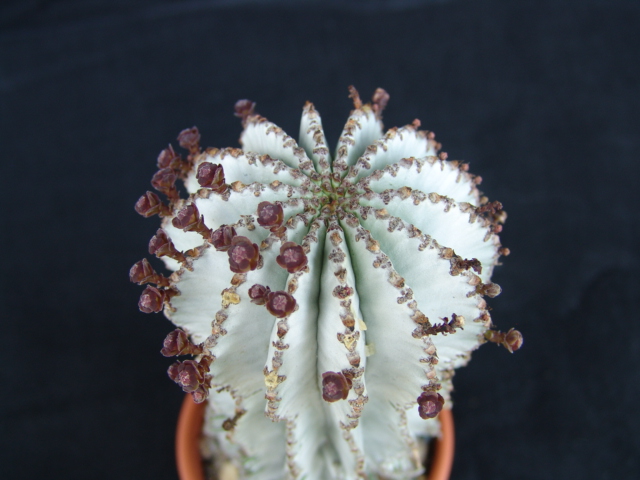 |
Euphorbia polygona 'Snowflake'This plant is the result of a successful "plant
rescue." One of our society members was asked if
he wanted a large euphorbia plant. The plant had
been in the possession of an elderly lady for more than
twenty years and had grown well, but during the past few
years the lady had been sick and the plant had
barely been watered. There had been more than
twelve stems but eight had shriveled and died. The
lady didn't want the plant to die and contacted our
society for help. Instead of trying to revive the
plant our member took a cutting from the healthiest stem
and worked on rooting the cuttings and developing a new
plant. The plant shown at left is a result of their
efforts. With a new pot, fresh potting soil, lots
of sun and regular watering, Euphorbia polygona 'Snowflake" is once
again looking very nice.
|
|
 |
Pachycereus schottii in Habitat
The "Senita Cactus" is one
of the rarest cacti in the American Southwest. While
common in Mexico it only occurs in a tiny portion of the
Organ Pipe National Monument in extreme southern Arizona,
right along the Mexican border. The Senita
grows long bristles from the aeroles of the flowering
stems, giving the tops of the stems a distinctly bristly,
fuzzy appearance. The Senita also produces several
flowers per each aerole. Most cacti only produce one
flower per aerole. This photo was taken in Organ
Pipe National Monument by member Bob Stewart. |
|
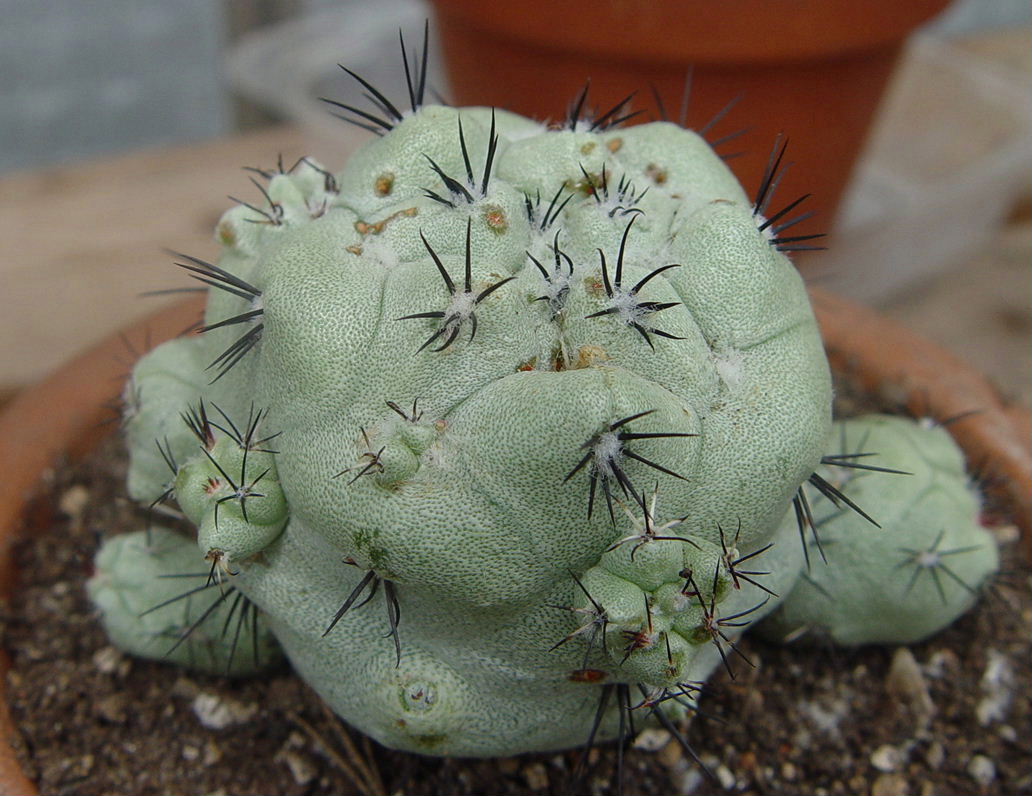 |
Ortegocactus macdougalliiThis is one of the most unusual and least understood of all cacti. It was discovered in 1952 by Tom MacDougall in Mexico. Since that time botanist have been unable to associate it with any existing genera and thus is placed in its own genus. The genus name Ortegocactus honors the Ortega family in Mexico who assisted in the plant's discovery. At maturity this is a small plant, seldom growing to more than 2 inches in diameter. Its flowers are yellow and approximately 1 inch in diameter. The plant pictured is in the collection of one of our club members living in the Baltimore, Maryland area. |
|
 |
Stenocereus thurberiThis is the organ pipe cactus in habitat in Organ
Pipe National Monument, Arizona. it was originally
known as Lemaireocereus
thurberi but time and taxonomy have taken their
toll and the genus Lemaireocereus
is no more. Unlike the other famous, big
cactus of Arizona, the saguaro, the organ pipe produces
multiple stems from the ground and tops out in height
about about 15 feet. This photo was taken by one
of our NCCSS members while visiting Organ Pipe National
Monument.
|
|
 |
Echeveria lauiMany consider this the most attractive of all the
echeverias. The leaves have a lovely bluish tint
and are pleasingly plump and symmetrical around the
plant center. Unfortunately, the bluish color is
due to a powdery coating (called a glaucous bloom) on
the leaves and this powder is easily marred by touching
the leaves. Despite its beauty E. laui is seldom
seen in shows due to the fear of the pointing, touching,
and smearing fingers of show visitors. E. laui is
not an easy echeveria to grow. It is very
sensitive to over-watering and will often rot at the
sight of the watering can. The flowers are in the
form of orange bells hung over the plant on a six to
eight inch stalk. The plant show was
grown by member Bob Stewart and lost in 2002 when a
tornado hit Bob's house and C&S collection!
|
|
| Back to Main Page |